
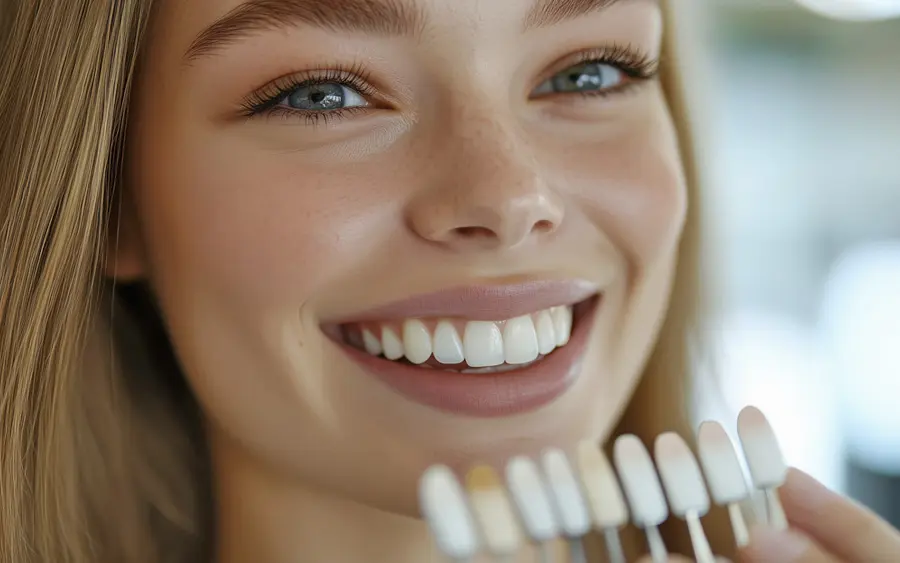
Bleaching
What is Bleaching (Teeth Whitening)?
Bleaching, also known as teeth whitening, is a cosmetic dental procedure that aims to lighten the color of natural teeth and remove stains and discoloration. It is one of the most popular treatments in aesthetic dentistry due to its quick results and minimal invasiveness. Teeth whitening can significantly improve the appearance of a person’s smile and boost self-confidence.
What Causes Tooth Discoloration?
Tooth discoloration can be caused by a variety of internal and external factors:
- Consumption of staining foods and beverages (coffee, tea, red wine, berries)
- Smoking or tobacco use
- Poor oral hygiene
- Aging (natural thinning of enamel)
- Use of certain medications (e.g., tetracycline antibiotics)
- Excessive fluoride exposure during childhood
- Trauma to the tooth
Types of Teeth Whitening
- In-Office Whitening: Performed by a dentist using high-concentration bleaching agents and often assisted by laser or light technology. Results are usually visible after a single session.
- At-Home Whitening Kits: Custom-made trays and professional-grade gels provided by the dentist to be used at home over several days.
- Over-the-Counter Products: Whitening strips, toothpastes, or gels available at pharmacies. These are less effective and slower compared to professional options.
Is Bleaching Safe?
When performed under the supervision of a dental professional, bleaching is a safe and effective procedure. Some individuals may experience temporary tooth sensitivity or gum irritation, which typically subsides within a few days. It's important to follow the dentist’s instructions carefully and avoid overuse of whitening products.
Who Can Benefit from Teeth Whitening?
Teeth whitening is suitable for most individuals with healthy gums and natural teeth. However, it may not be effective on:
- Dental restorations such as crowns, veneers, or fillings
- Teeth with intrinsic discoloration (e.g., caused by medication or trauma)
- Individuals with untreated cavities or gum disease (treatment should be done beforehand)
How to Maintain Whitening Results
- Avoid staining foods and drinks
- Brush and floss regularly
- Use whitening toothpaste once or twice a week
- Schedule regular dental cleanings
- Touch-up treatments as recommended by your dentist
Conclusion
Bleaching is a simple, safe, and effective way to achieve a brighter smile. Whether done professionally or at home with guidance, it can enhance your appearance and confidence. For the best and safest results, it is recommended to consult with a dental professional to determine the most suitable whitening method for your teeth.